Artículo: Should You Buy a Second-Hand Baptism Gown?
Should You Buy a Second-Hand Baptism Gown?
Why Some Families Choose to Keep Christening Clothes in the Family
A baptism gown may look like a beautiful white piece of clothing.
But for a Christian family, it can mean much more.
The white garment used at Baptism is connected with one of the most important symbols of the sacrament: the beginning of a new life with Christ.
This is why some families feel uncomfortable with the idea of buying a baptism gown that was previously worn by an unknown child — or selling their own baby’s christening clothes immediately after the ceremony.
There is an important distinction to make from the beginning.
The Catholic Church does not have a universal rule saying that a baptism gown must be brand new, nor a general rule forbidding families from selling one afterward.
But church law is not the only reason traditions exist.
For generations, Christian families have treated baptism clothing as a keepsake connected with the child’s spiritual beginning. Instead of thinking of it as an outfit worn for a few hours, they preserve it, pass it to another child in the family, or keep it for the next generation.
So perhaps the better question is not simply:
“Am I allowed to buy or sell a used baptism gown?”
It is:
“What does the baptism garment represent, and how do I want to treat it after the sacrament?”
For families preparing for this special day, choosing the right baptism and christening clothing can be part of creating a tradition that begins with one child and may continue for generations.

Why Is the Baptism Gown White?
The white garment is not simply a dress code for a beautiful ceremony.
It carries religious meaning.
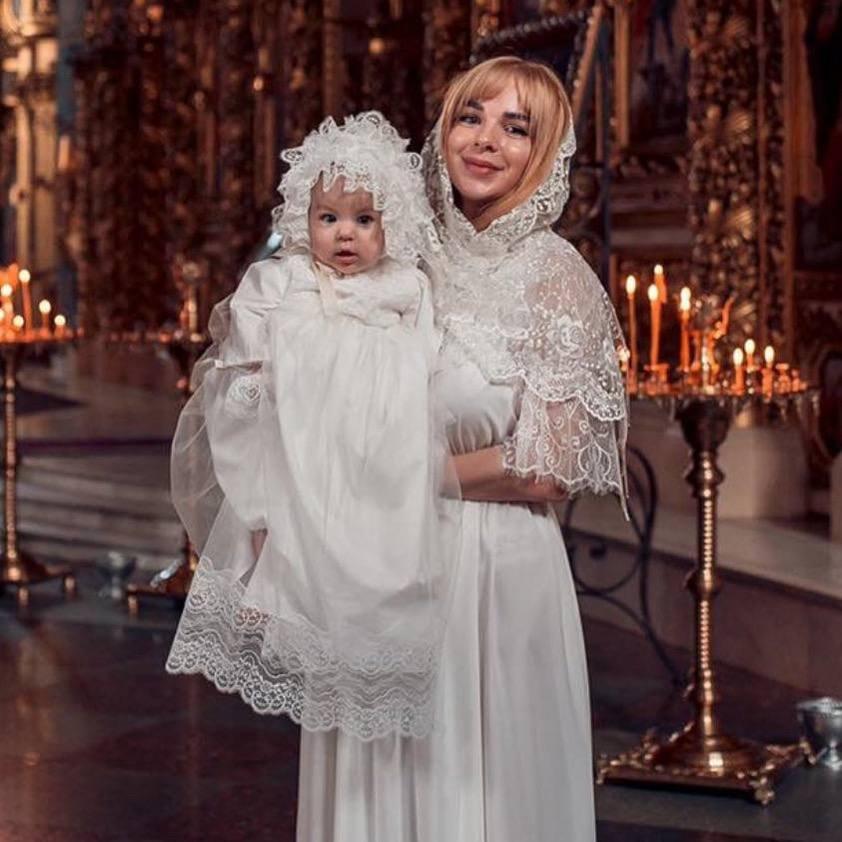
In the Catholic tradition, after Baptism the newly baptized is clothed in white as a visible sign of the new life received through Christ.
The Catechism of the Catholic Church explains that:
“The white garment symbolizes that the person baptized has ‘put on Christ.’”
The symbolism is powerful.
Baptism marks a beginning.
A new spiritual life.
A new relationship with God.
A new identity in Christ.
That is one reason many families traditionally choose a special white garment specifically for this day.

Why Some Families Prefer a New Baptism Gown
There is no requirement that the gown must come directly from a store.
Nevertheless, the symbolism of newness can be deeply meaningful.
A garment chosen especially for one child’s Baptism can represent the beginning of that child’s Christian life.
It has no previous story.
The baby’s story begins with it.
Parents choose it, prepare it, and sometimes select a personalized baptism gown embroidered with the baby’s name, initials, cross or baptism date. Personalization can make the garment even more closely connected to that child’s story.
For families who approach baptism clothing this way, buying an unknown child’s used christening gown can feel different from buying an ordinary second-hand baby outfit.
The issue is not that the previous garment is “bad,” “unclean,” or spiritually dangerous.
It is about symbolism and intention.
A baptism gown represents a beginning.
And some parents want that beginning to belong entirely to their child.
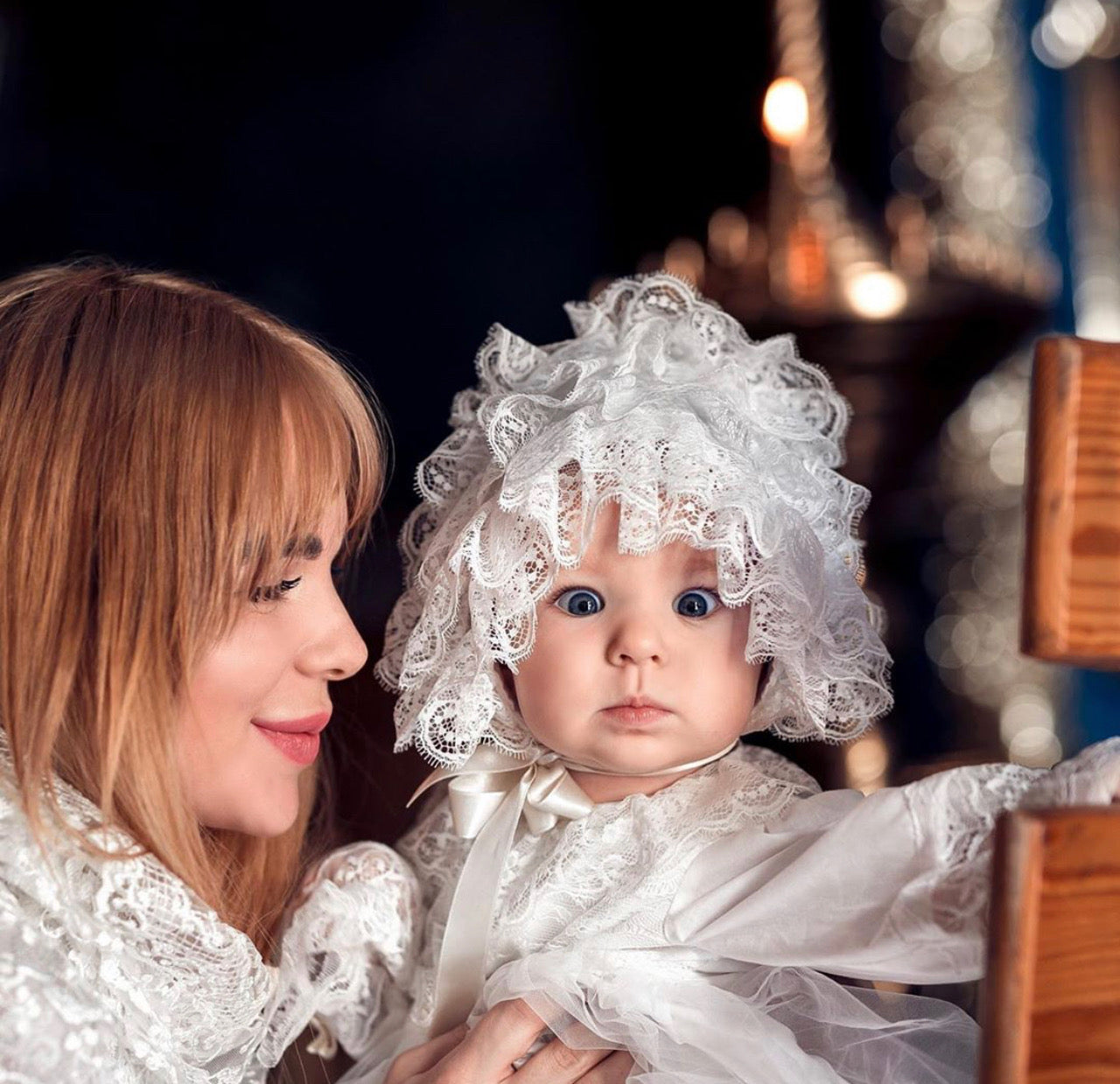
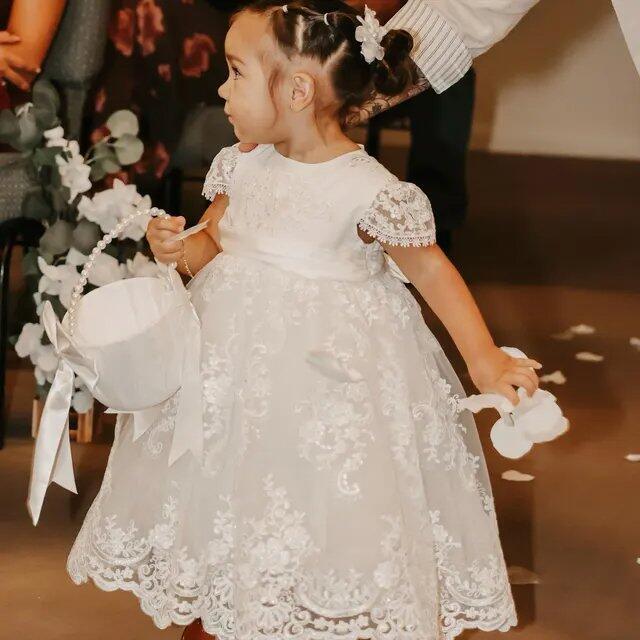
Some parents choose a traditional christening gown, while others prefer a shorter baptism outfit for a baby boy or a delicate baptism dress for a baby girl. The style can be different; what matters is choosing something that feels meaningful for your child’s day.

Is It Wrong to Buy a Second-Hand Baptism Gown?
It would be inaccurate to say that Christianity universally forbids it.
It does not.
A Baptism does not become less valid because a baby wears a previously worn garment.
However, families who follow older baptism traditions may still choose not to purchase christening clothing second-hand from strangers.
Why?
Because they do not see the baptism gown as ordinary occasion wear.
A party dress can be bought, worn and resold.
A baptism garment is associated with something different: the child’s entrance into Christian life.
For that reason, many parents prefer one of two traditions:
choose a new baptism garment for the child, or use a baptism garment that already belongs to the family.
And the second option has a completely different meaning from ordinary second-hand clothing.

A Family Baptism Gown Is Different From Second-Hand Clothing
Imagine two gowns.
One is purchased online from an unknown family, worn for a ceremony and then resold again.
The other belonged to the baby’s mother.
She wore it at her Baptism.
Later her younger sister wore it.
It was carefully washed, wrapped and kept for years.
And now another baby in the same family is baptized in it.
Technically, both garments have been “used.”
Emotionally and traditionally, however, they represent very different things.
The second has become a family heirloom.
For this reason, some parents intentionally choose heirloom christening gowns made from natural fabrics and traditional lace, with the idea that the garment should survive far beyond one ceremony.
Related reading: What Is a Family Heirloom Christening Gown?
It carries family history.
The same white garment appears in photographs separated by years or even generations.
Instead of leaving the family after Baptism, it remains within it.

Can Brothers and Sisters Wear the Same Baptism Gown?
Yes — and this is one of the most beautiful christening traditions.
A baptism gown can be passed from an older sibling to a younger one.
There are even old family beliefs in some cultures that sharing baptism clothing between siblings symbolizes closeness and harmony between the children.
This should be understood as folk or family tradition rather than a teaching or promise of the Church.
Still, the symbolism is lovely.
The children enter Christian life wearing the same family garment.
Years later, their parents can place their baptism photographs beside one another and see the same gown connecting both moments.
Instead of becoming “second-hand,” the gown becomes their gown — part of the family’s story.

What About a Mother’s or Grandmother’s Christening Gown?
This may be even more meaningful.
There is something extraordinary about dressing a baby in the same garment worn by their mother or father decades earlier.
Or discovering that a grandmother carefully preserved a christening gown for the next generation.
In that case, age does not diminish the garment’s meaning.
It adds to it.
A new baby’s spiritual beginning becomes connected with the generations that came before.
That is the essence of an heirloom christening gown.
The white garment is only one part of the ceremony. If this is your first child’s Baptism, our Baby Baptism Guide explains the ceremony, godparents, baptism clothing, preparation and other questions parents often have before the day.

Should You Sell Your Baby’s Baptism Gown?
Again, there is no universal Church prohibition saying that parents may never sell baptism clothing.
But before listing the gown for sale, consider what you are actually giving away.
Not simply cotton, silk or lace.
This was the garment your baby wore at the beginning of his or her sacramental life.
It may appear in some of the most important photographs from infancy.
Perhaps one day there will be another baby.
Perhaps your child will grow up and want to see what they wore for their Baptism.
Perhaps decades from now there will be a grandchild.
At that moment, the gown you considered selling after being worn once may suddenly feel priceless.
Some things become more valuable with time precisely because we did not sell them.

Is a Baptism Gown a Blessed or Sacred Object?
This question requires an important clarification.
The white garment has profound symbolism within the baptismal rite, but parents should not automatically assume that every christening outfit becomes a formally blessed sacred object simply because a child wore it during Baptism.
The sacrament is received by the child, not by the clothing.
At the same time, something does not have to be a formally blessed religious object for a family to treat it with reverence and sentimental importance.
A baptism certificate is paper.
A baptism photograph is a photograph.
A baptism gown is fabric.
Yet what these things represent can make them irreplaceable to a family.

Why We Would Think Twice Before Renting a Baptism Gown
Renting raises a similar question.
Can a rented garment be worn for Baptism?
There is no universal rule saying it cannot.
But consider the meaning of the day.
You carefully prepare for your child’s Baptism.
You choose godparents.
You select the church.
You hire a photographer and keep photographs.
You may save the baptism candle and certificate.
And then the white garment — one of the visible symbols of that moment — is returned to a rental company the following morning.
For some families, that is perfectly acceptable.
For others, it feels inconsistent with the meaning they attach to the ceremony.
Buying does not have to mean excessive spending.
It can simply mean choosing something that belongs to the child and can remain with the family afterward.

Baptism Clothing Is Not Just “One-Time Clothing”
Parents sometimes hesitate to purchase a beautiful christening gown because they think:
“My baby will only wear it once.”
Perhaps.
But wearing something once does not necessarily make it disposable.
A wedding dress may be worn once.
A baby’s hospital bracelet is used once.
The first pair of tiny shoes may fit for only a few weeks.
Yet families preserve these objects because their value is not measured by the number of times they were used.
The same can be true of a baptism gown.
Its purpose does not necessarily end when the ceremony ends.
After Baptism, its second purpose can begin: to preserve the memory of the day.

What Should You Do With the Baptism Gown After the Ceremony?
Instead of immediately selling it, consider preserving it.
Have the garment cleaned according to the fabric care instructions and make sure it is completely dry before long-term storage.
Keep it protected from direct sunlight, moisture and dust.
You may store it together with other baptism keepsakes, such as the baptism candle, certificate, photographs, rosary or another meaningful reminder of the day.
Some parents also add a small note with:
- the child’s full name;
- date of Baptism;
- church;
- godparents’ names;
- and a photograph from the ceremony.
If another child in the family later wears the gown, another name and date can be added to its story.
Eventually, what began as a baby’s little white outfit becomes a piece of family history.

New or Family Heirloom: Two Beautiful Choices
When choosing baptism clothing, we love the idea of thinking beyond the ceremony itself.
There are two especially meaningful possibilities.
Begin a tradition.
Choose a new baptism gown specifically for your baby. After Baptism, preserve it carefully. Perhaps a younger brother or sister will wear it. Perhaps, many years from now, your baby’s own child will.
Or:
Continue a tradition.
If your family already has a christening gown, consider bringing it back to life. Check that the fabric is still strong and safe for a baby, have it professionally cleaned if necessary, and allow another generation to become part of its story.
In both cases, the gown remains connected to the family rather than becoming simply another piece of second-hand clothing.

Does a baptism gown have to be new?
No universal Catholic rule requires a brand-new gown. However, some families prefer a new garment because Baptism symbolizes the beginning of a new life in Christ.
Is it a sin to buy a used baptism gown?
There is no general Church teaching saying that purchasing a second-hand baptism gown is a sin. Families may nevertheless choose not to do so because of the symbolic and sentimental meaning they attach to baptism clothing.
Can siblings use the same baptism gown?
Yes. Passing a christening gown between siblings is a beautiful family tradition and can eventually transform the garment into an heirloom.
Is it good for siblings to share a baptism gown?
Some family and folk traditions associate sharing baptism clothing with closeness and harmony between siblings. This is a tradition, not a guarantee or formal teaching of the Church.
Can my baby wear my old christening gown?
Yes. If the garment is still safe and in good condition, wearing a parent’s baptism gown can create a meaningful connection between generations.
Should I buy a baptism gown from a stranger?
There is no religious prohibition against doing so. However, families who see baptism clothing as a symbol of the child’s unique spiritual beginning may prefer either a new garment or one passed down within their own family.
Can I sell my baby’s christening gown?
There is no universal Church prohibition against selling it. Still, before doing so, consider whether you may want to preserve it as a baptism keepsake or family heirloom.
Should I keep my baby’s baptism gown?
We believe it is worth considering. The garment can become a physical reminder of your child’s Baptism and may one day be passed to siblings, grandchildren or future generations.

Before You Call It “Just a Dress”
On the day of Baptism, a baby is dressed in white.
Years later, the child will probably remember nothing about the ceremony.
But the parents will.
The photographs will.
And perhaps the little white garment will too.
This is why we hesitate to think of baptism clothing in the same way we think about ordinary second-hand children’s clothes.
Not because a previously worn gown carries something bad.
Not because selling one is forbidden.
But because Baptism is a beginning, and the white garment is one of the visible symbols of that beginning.
If your family already has a baptism gown, preserve the tradition.
If you do not, perhaps your baby’s gown can be the first.
Keep it.
Write the name and date.
Care for it.
And years from now, when another tiny baby in your family wears the same white garment to the baptismal font, it will no longer be simply a christening gown.
It will be your family’s christening gown.


De Nataliia Gudyma